
There’s something about a slow-cooked pork stew that wraps you in a warm, familiar hug after a long day. It’s the kind of meal that stirs up childhood memories—family dinners where the kitchen was filled with the rich smell of simmering meat and soft vegetables. On busy nights, I reach for my Crockpot, knowing I can toss in simple ingredients and come back to something hearty and soul-soothing, no fuss involved.
This recipe is about practicality meeting nostalgia. It’s not fancy, but it’s honest—meat that falls apart tender, potatoes that absorb every savory drop, and a broth that’s thick with flavor. I like to think of it as a little act of self-care: a meal that demands minimal effort but delivers maximum comfort, perfect for those hectic evenings when you just want to eat something that feels like a warm blanket.
Focusing on how this slow-cooked pork stew can be a nostalgic comfort for busy weeknights, combining practical prep with rich, homey flavors that evoke family dinners from childhood.
The story behind this recipe
This recipe started from a moment of needing comfort that didn’t require hours in the kitchen. I remember a winter evening when I was overwhelmed, and the slow cooker was my quiet hero, turning simple pork and vegetables into something that smelled like home. It’s become my go-to for those hectic days when I want a meal that’s honest, filling, and easy to forget about until it’s time to eat. Sometimes, the best dishes come from just trusting the process, letting the slow cooker do its magic, and knowing that a warm, hearty stew will be waiting.
Key Ingredients and Tips
- Pork shoulder: I use a well-marbled cut that becomes melt-in-your-mouth tender after hours in the slow cooker. Swap for pork butt if needed, but avoid lean cuts—they dry out too easily.
- Carrots: Their natural sweetness softens beautifully, releasing a subtle earthy aroma. You can swap with parsnips for a slightly different sweetness, but keep an eye on the texture.
- Onions: They dissolve into the broth, adding a savory depth. Red onions work well if you want a milder flavor, but yellow onions give a classic, hearty base.
- Garlic: I love how it turns into fragrant, mellow pockets of flavor during slow cooking. If you love a strong garlic punch, consider adding a bit more near the end to keep that punch alive.
- Broth: I prefer a good chicken or beef broth for richness, but veggie broth works in a pinch. For a smoky note, toss in a splash of Worcestershire or a smoked paprika—deepens the flavor.
- Potatoes: They soak up all the flavors and get tender but hold their shape. Russets are great, but if you want more structure, go for Yukon Golds—they’re creamy and hold up well.
- Herbs: A sprig of thyme or a bay leaf adds an herbal note that elevates the stew. Dried herbs work fine if fresh isn’t available, just use about half the amount for a subtler touch.
Spotlight on key ingredients
Pork shoulder:
- I use a well-marbled cut that becomes melt-in-your-mouth tender after hours in the slow cooker. Swap for pork butt if needed, but avoid lean cuts—they dry out too easily.
- Carrots: Their natural sweetness softens beautifully, releasing a subtle earthy aroma. You can swap with parsnips for a slightly different sweetness, but keep an eye on the texture.
- Onions: They dissolve into the broth, adding a savory depth. Red onions work well if you want a milder flavor, but yellow onions give a classic, hearty base.
Key flavor ingredients:
- Garlic: I love how it turns into fragrant, mellow pockets of flavor during slow cooking. If you love a strong garlic punch, consider adding a bit more near the end to keep that punch alive.
- Broth: I prefer a good chicken or beef broth for richness, but veggie broth works in a pinch. For a smoky note, toss in a splash of Worcestershire or a smoked paprika—deepens the flavor.
- Potatoes: They soak up all the flavors and get tender but hold their shape. Russets are great, but if you want more structure, go for Yukon Golds—they’re creamy and hold up well.
Notes for ingredient swaps
- Pork Shoulder: I prefer a well-marbled cut for melt-in-your-mouth tenderness. Swap with pork butt if needed, but avoid leaner options—they tend to dry out.
- Carrots: Their natural sweetness softens beautifully and releases a subtle earthy aroma. For a different twist, try parsnips, but keep an eye on cooking time.
- Onions: They dissolve into the broth, adding depth. Red onions give a milder flavor, yellow onions bring a hearty base—use what you have.
- Garlic: It turns mellow and fragrant during slow cooking. For a stronger punch, add a bit more near the end, but don’t overdo it to keep the aroma balanced.
- Broth: Chicken or beef broth adds richness, but veggie broth works if that’s what’s on hand. For smoky depth, toss in a splash of Worcestershire or smoked paprika.
- Potatoes: They soak up flavors and hold shape well. Russets are classic, but Yukon Golds are creamier and more resilient—choose based on your preference.
- Herbs: A sprig of thyme or a bay leaf elevates the flavor. Dried herbs are fine if fresh aren’t available—use about half the amount for subtlety.
Equipment & Tools
- Large slow cooker: To cook everything slowly and evenly over several hours.
- Sharp knife: For trimming, chopping meat and vegetables.
- Cutting board: A stable surface for prepping ingredients.
- Spoon: For stirring and serving.
- Skillet: To sear the pork for extra flavor.
Step-by-step guide to Crockpot Pork Stew
- Gather all equipment: a large 6-quart slow cooker, a sharp knife, a cutting board, and a spoon for stirring.
- Trim excess fat from pork shoulder; cut into 2-inch chunks. This helps it cook evenly and absorb flavors better.
- Chop carrots into thick rounds, about 1-inch. No need to peel if they’re organic; just wash well.
- Dice one large yellow onion. Aim for uniform pieces so they soften evenly.
- Mince 4 cloves of garlic. The aroma of fresh garlic is best released when chopped finely.
- In a skillet over medium heat, add a splash of oil. Sear pork chunks until browned on all sides, about 5-7 minutes. This locks in flavor and adds depth.
- Transfer seared pork to the slow cooker. Pour in 4 cups of chicken broth, enough to cover the meat halfway.
- Add carrots, onions, 2 bay leaves, and a sprig of thyme. Stir gently to combine.
- Set the slow cooker to low for 8 hours. The house will fill with the smell of slow-cooked goodness as it gently simmers.
- Check halfway through—if the liquid drops too low, add a splash more broth. Avoid overfilling, which can cause spills.
- After 8 hours, test for tenderness: pork should be fall-apart soft, vegetables tender but not mushy.
- Remove bay leaves and thyme sprig. Taste and adjust salt or pepper if needed.
- For a thicker stew, mash a few potatoes or stir in a slurry of cornstarch and cold water, then cook on high for 15 minutes until thickened.
- Let the stew rest for 10 minutes before serving. This allows flavors to meld and makes serving easier.
- Serve hot, with crusty bread or over rice. The stew should be rich, thick, and filled with tender pork and sweet carrots.
Once cooked, let the stew sit off heat for 10 minutes. Remove bay leaves and thyme. Taste and adjust seasoning. Serve in deep bowls, ideally with crusty bread or over rice. The stew should be thick, fragrant, and bursting with tender pork and sweet carrots.
How to Know It’s Done
- Pork should be easily shreddable with a fork.
- Broth should be rich and slightly thickened.
- Vegetables should be tender and flavorful, not mushy.
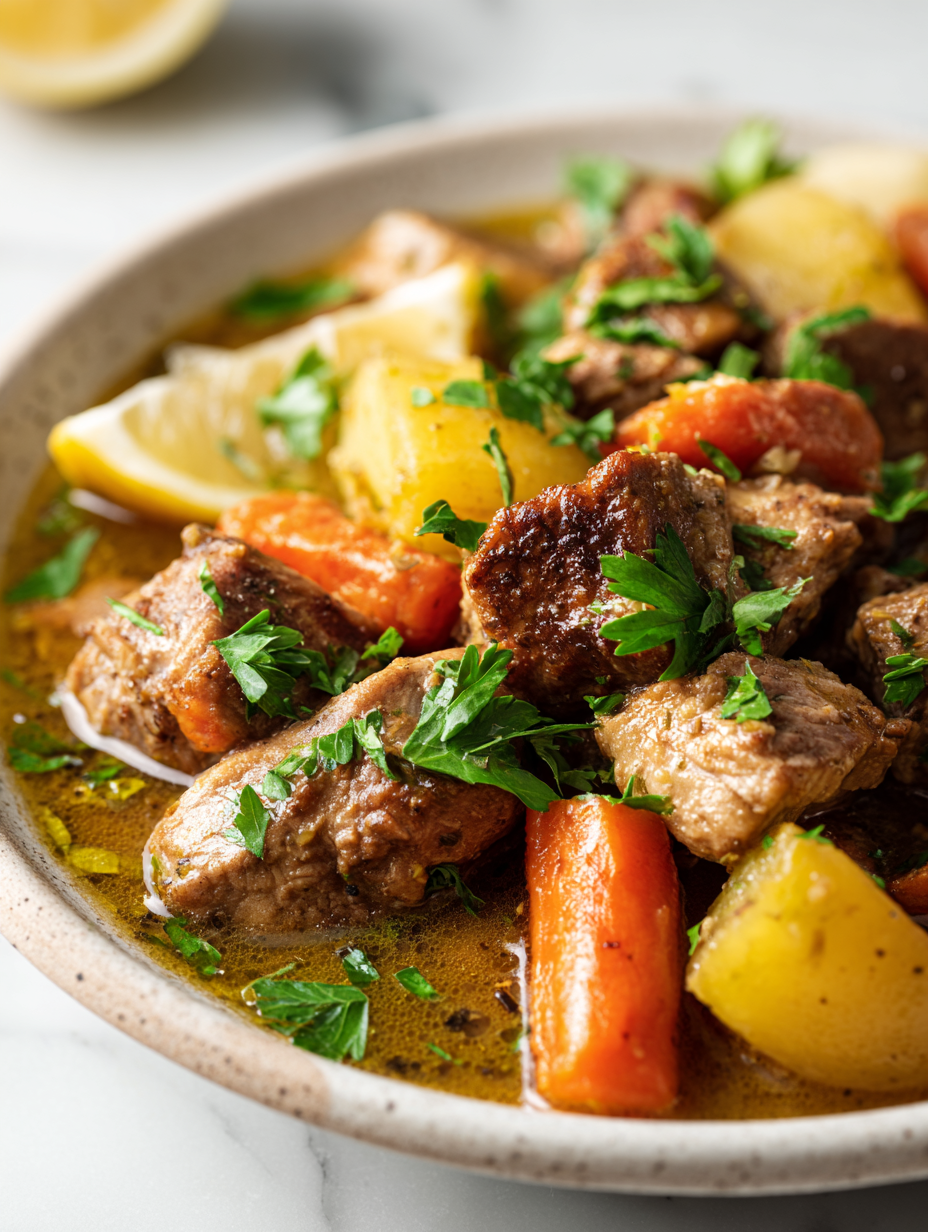
Slow-Cooked Pork Stew
Ingredients
Equipment
Method
- Trim excess fat from the pork shoulder and cut it into 2-inch chunks. This helps it cook evenly and absorb flavors beautifully.
- Chop the carrots into 1-inch thick rounds, and dice the large yellow onion into uniform pieces. Mince the garlic cloves finely to release maximum flavor.
- In a skillet over medium heat, add a splash of oil and sear the pork chunks until they develop a golden-brown crust on all sides, about 5-7 minutes. This step locks in juices and adds depth to the flavor.
- Transfer the seared pork to the slow cooker. Pour in the broth, ensuring it covers at least halfway up the meat.
- Add the chopped carrots, diced onions, bay leaves, and a sprig of thyme to the slow cooker. Gently stir everything together to combine the flavors.
- Cover the slow cooker and cook on low for about 8 hours. The house will be filled with a savory aroma as the pork becomes tender and the vegetables soften.
- After cooking, check that the pork is easily shreddable with a fork and the vegetables are tender. Remove the bay leaves and thyme sprig.
- If you'd like a thicker stew, mash the potatoes and stir them into the broth. Let it cook uncovered for 15 minutes to thicken, or stir in a slurry of cornstarch and water and cook for a few more minutes until bubbly.
- Taste the broth and adjust seasoning with additional salt and pepper if needed. Let the stew rest for 10 minutes to allow flavors to meld.
- Serve the hearty stew hot in bowls, with crusty bread or over rice. The pork should be fall-apart tender, and the broth rich and flavorful, inviting comfort with each spoonful.
Pro tips for perfect stew
- Bolded Mini-Head: Sear pork in batches to develop rich, caramelized flavors that deepen the stew’s overall taste.
- Bolded Mini-Head: Use a splash of apple cider vinegar or lemon juice in the broth for a bright, tangy contrast to the richness.
- Bolded Mini-Head: Toss in a handful of frozen peas or green beans in the last 15 minutes for a fresh, pop of color and texture.
- Bolded Mini-Head: For a smoky undertone, add a pinch of smoked paprika early in the cooking process to infuse the broth.
- Bolded Mini-Head: Keep the lid on during cooking to trap moisture and intensify flavors, but crack it open at the end for a quick broth reduction.
- Bolded Mini-Head: If stew gets too thick, gently stir in warm broth or water to loosen it without diluting flavor.
- Bolded Mini-Head: Rest the stew for at least 10 minutes after cooking; this helps flavors meld and pork fibers relax for easier serving.
Common mistakes and how to fix them
- FORGOT to sear pork: Searing locks in flavor, do it before slow cooking for best results.
- DUMPED liquid too early: Keep lid on to retain moisture and flavors during cooking.
- OVER-TORCHED vegetables: Add delicate herbs late to prevent burning and bitterness.
- SKIMMED broth excessively: Some fat adds richness, skim only if greasy or overly cloudy.
Quick fixes and pantry swaps
- If the stew is too thick, splash in warm broth and stir gently until loosened.
- When meat isn’t tender enough, extend cooking time on low for an extra hour.
- Splash a bit of vinegar or lemon juice if flavors taste dull or flat.
- Patch over burnt vegetables by removing them quickly and adding fresh ones near the end.
- Shield the stew with foil if vegetables start to over-torched, to prevent bitterness.
Prep, store, and reheat tips
- Chop vegetables like carrots and onions the night before; store in an airtight container in the fridge for up to 24 hours. Their bright flavors stay fresh and ready for slow cooking.
- Season and sear the pork shoulder a day in advance if you want a richer flavor; keep in the fridge covered, then transfer to the slow cooker directly.
- The stew tastes even better the next day as flavors meld. Store leftovers in an airtight container in the fridge for up to 3 days, or freeze for 2–3 months.
- Reheat gently on the stovetop or in the microwave until bubbling hot; the aroma will tell you it’s ready. Expect the meat to reabsorb some moisture, so add a splash of broth if it thickens too much.
- For a quick reheat, microwave in 30-second bursts, stirring in between, until steaming and fragrant. The stew should have a rich, thick consistency with tender pork and softened vegetables.
Top questions about Crockpot Pork Stew
1. Should I sear the pork first?

Searing the pork before slow cooking adds a rich, caramelized flavor that deepens the stew. Skip it, and the meat might lack that extra layer of taste.
2. Can I use a different cut of pork?
Using a well-marbled pork shoulder ensures it becomes tender and juicy. If you use leaner cuts, it might dry out during slow cooking.
3. When should I add vegetables?
Add vegetables like carrots and onions early to soften and absorb flavors. For a fresher taste, toss in green beans or peas near the end.
4. How long should I cook it?
Cooking on low for about 8 hours yields tender, falling-apart pork and flavorful broth. Check at the halfway mark to prevent overcooking.
5. What if the stew is too thick or thin?

If the stew gets too thick, stir in some warm broth or water. If it’s too watery, let it simmer uncovered for 15 minutes to reduce.
6. How do I store leftovers?
Leftovers store well in the fridge for up to 3 days, and in the freezer for 2-3 months. Reheat gently until bubbling hot.
7. Can I add smoky flavors?
For a smoky flavor, add a pinch of smoked paprika or a splash of Worcestershire sauce during the last hour of cooking.
8. Can I use dried herbs?
Using fresh herbs like thyme or bay leaves enhances flavor. Dried herbs work too, just use about half as much for subtlety.
9. How do I know when it’s ready?

The best way to tell if it’s done is when the pork shreds easily, the vegetables are tender, and the broth is rich and slightly thickened.
10. Should I add acid at the end?
Adding a splash of vinegar or lemon juice at the end brightens the broth, balancing the richness and deep flavors.
This stew isn’t just about filling bellies; it’s about those quiet moments when the house smells like childhood and comfort. It’s a simple reminder that some of the best meals are slow and honest, built on humble ingredients and patience. When you sit down with a warm bowl, you’re tasting a little bit of home, no matter where you are.
In a world that moves so fast, this dish offers a pause—a chance to slow down, breathe in the savory aroma, and enjoy something made with hands and heart. It’s not perfect, but it’s real, and sometimes that’s exactly what you need after a long day.