
There’s something about a slow-cooked meal that feels like a warm hug after a long day. This Crockpot Minestrone Soup is my go-to when I need comfort without the fuss. It transforms simple ingredients—carrots, beans, tomatoes—into a soulful, stress-relieving bowl that practically makes itself.
I love how this soup invites you to slow down. No frantic chopping or stirring, just set it and forget it. By dinner time, the house fills with a rich, smoky aroma, and I know I’ve got a hearty, nourishing meal waiting. It’s the kind of dish that makes busy nights feel a little more manageable.
Focusing on the unspoken comfort of a slow-cooked meal that feels like a warm hug after a long day, highlighting how this recipe transforms simple ingredients into a soulful, stress-relieving bowl.
The story behind this recipe
- This soup was born out of a busy fall weekend when I needed something nourishing but low-effort. I remember coming home to the smell of garlic and herbs wafting through the house, a little chaotic but comforting. It’s become a staple since, especially on those days when I just want dinner to make itself. There’s something deeply satisfying about a meal that’s built with patience and simmered to perfection, all while I kick back and unwind.
- I first started making this after a long day of errands, craving something warm and familiar. The slow cooker made it feel almost effortless—dump, set, forget. It’s a dish that reminds me to slow down and enjoy the simple things. Plus, family always asks for seconds, which is my favorite sign of a good meal.
Ingredient breakdown: key components
- Canned tomatoes: I love the burst of acidity and sweetness they bring, especially when they simmer down into a rich broth. You can swap with fresh, but I find the canned ones break down nicely and save prep time.
- White beans: They make the soup creamy and hearty without needing meat. If you prefer, kidney beans work too, but they add a different texture and flavor punch.
- Carrots: I use organic because their sweetness really shines through after hours of slow cooking. If you’re out, parsnips can add a similar gentle sweetness, just a tad earthier.
- Vegetable broth: I opt for homemade when I have time—it’s deeper and more soulful. Store-bought is fine; just look for low sodium so you control the salt level.
- Pasta: I throw in ditalini or small shells because they soak up the soup’s flavors and are perfect for a spoonful. If you want it lighter, skip the pasta and add more beans or greens.
- Herbs: Fresh basil and thyme elevate the whole bowl with a bright, fragrant kick. If fresh isn’t available, dried herbs work, but add them early to develop their aroma.
- Olive oil: A drizzle at the end adds a velvety richness and ties everything together. Use a good quality one—your nose will thank you when you open the bottle.
Spotlight on key ingredients
Canned tomatoes:
- I love the burst of acidity and sweetness they bring, especially when they simmer down into a rich broth. You can swap with fresh, but I find the canned ones break down nicely and save prep time.
- White beans: They make the soup creamy and hearty without needing meat. If you prefer, kidney beans work too, but they add a different texture and flavor punch.
- Carrots: I use organic because their sweetness really shines through after hours of slow cooking. If you’re out, parsnips can add a similar gentle sweetness, just a tad earthier.
White beans:
- They become tender and creamy, soaking up flavors beautifully during slow cooking. If you want a firmer bite, opt for small navy beans instead.
- Carrots: Their natural sweetness intensifies, and they soften to a melt-in-your-mouth texture. For a sharper contrast, add a splash of lemon juice right before serving.
Notes for ingredient swaps
- Canned tomatoes: I love the burst of acidity and sweetness they bring, especially when they simmer down into a rich broth. You can swap with fresh, but I find the canned ones break down nicely and save prep time.
- White beans: They make the soup creamy and hearty without needing meat. If you prefer, kidney beans work too, but they add a different texture and flavor punch.
- Carrots: I use organic because their sweetness really shines through after hours of slow cooking. If you’re out, parsnips can add a similar gentle sweetness, just a tad earthier.
- Vegetable broth: I opt for homemade when I have time—it’s deeper and more soulful. Store-bought is fine; just look for low sodium so you control the salt level.
- Pasta: I throw in ditalini or small shells because they soak up the soup’s flavors and are perfect for a spoonful. If you want it lighter, skip the pasta and add more beans or greens.
- Herbs: Fresh basil and thyme elevate the whole bowl with a bright, fragrant kick. If fresh isn’t available, dried herbs work, but add them early to develop their aroma.
- Olive oil: A drizzle at the end adds a velvety richness and ties everything together. Use a good quality one—your nose will thank you when you open the bottle.
Equipment & Tools
- Large slow cooker: To cook everything evenly over hours, hands-free.
- Sharp knife: For precise, quick chopping of vegetables.
- Cutting board: Provides a stable surface for chopping.
- Ladle: To serve the soup without splashes.
Step-by-step guide to Crockpot Minestrone
- Equipment & Tools: Gather a large slow cooker (6-8 quart), a sharp knife, a cutting board, and a ladle for serving.
- Chop vegetables: Dice 2 carrots, 2 celery stalks, and 1 onion into small, uniform pieces for even cooking. Set aside.
- Sauté aromatics: In a skillet over medium heat (about 160°C/320°F), warm 2 tbsp olive oil. Add onions, carrots, and celery. Cook until fragrant and slightly softened, about 5-7 minutes. Transfer to slow cooker.
- Add base ingredients: Pour in 1 can (28 oz) crushed tomatoes, 4 cups vegetable broth, and 1 can (15 oz) white beans (drained and rinsed). Stir well.
- Season & flavor: Stir in 1 tsp dried thyme, 1 bay leaf, and salt & pepper to taste. Cover and cook on low (about 90°C/195°F) for 6-8 hours.
- Add pasta & greens: About 30 minutes before serving, stir in ½ cup small pasta (like ditalini), and a handful of chopped kale or spinach. Replace lid and cook until pasta is tender, about 30 minutes.
- Final touches: Remove bay leaf. Taste and adjust salt or pepper if needed. Drizzle with a little olive oil for shine and richness.
- Serve hot: Ladle into bowls, garnish with fresh basil if desired, and enjoy a steaming, hearty bowl.
Once cooked, remove the bay leaf and let the soup sit for 5 minutes to settle flavors. Ladle into bowls, drizzle with olive oil, and serve immediately.
How to Know It’s Done
- Vegetables are tender and fragrant after sautéing.
- Soup is bubbling gently with a rich aroma at the 2-hour mark.
- Pasta is al dente and greens are wilted but vibrant.
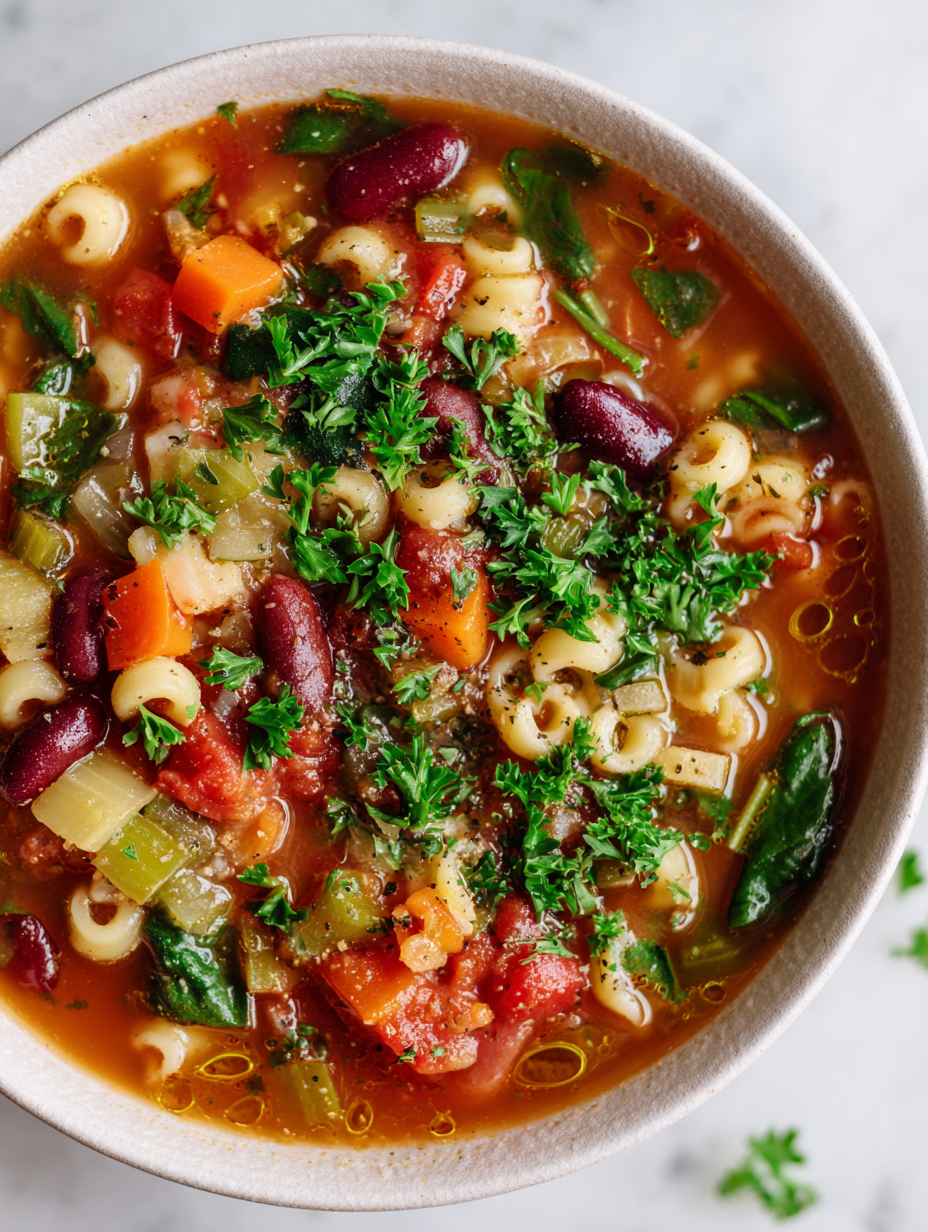
Crockpot Minestrone Soup
Ingredients
Equipment
Method
- Gather all your ingredients: dice the carrots, celery, and onion into small, even pieces for quick, uniform cooking.
- Heat 2 tablespoons of olive oil in a skillet over medium heat until it shimmers and starts to smell fragrant.
- Add the diced onions, carrots, and celery to the skillet. Sauté for about 5-7 minutes until the vegetables are fragrant, softened, and slightly golden around the edges.
- Transfer the sautéed vegetables into your slow cooker, spreading them evenly at the bottom.
- Pour in the crushed tomatoes and vegetable broth, then add the drained white beans, dried thyme, bay leaf, and a pinch of salt and pepper. Stir everything together.
- Cover the slow cooker with the lid and cook on low for 6 to 8 hours, allowing the flavors to meld and the vegetables to become tender.
- About 30 minutes before serving, stir in the small pasta and chopped greens. Cover and continue cooking until the pasta is al dente and greens are wilted, approximately 30 minutes.
- Remove the bay leaf and taste the soup, adjusting salt and pepper as needed. Drizzle with 2 tablespoons of olive oil for a velvety finish.
- Serve hot, garnished with fresh basil leaves for a bright, fragrant touch. Enjoy your hearty, comforting minestrone!
Pro Tips for Perfect Minestrone
- Sear aromatics before slow cooking to deepen flavor. The aroma will turn rich and fragrant.
- Use fresh herbs at the end for a bright, fragrant finish—dried herbs early for depth.
- Add pasta in the last 30 minutes to prevent mushiness and absorb flavors.
- For a smoky twist, toss in a pinch of smoked paprika during sautéing.
- If soup is too thick, swirl in a splash of warm broth for a silky texture.
- To intensify tomato flavor, simmer with a teaspoon of sugar or a splash of balsamic vinegar.
- Rest the soup after cooking for 5 minutes to let flavors meld and settle.
Common mistakes and how to fix them
- FORGOT to brown vegetables: Sauté until fragrant; skip this step and soup may taste flat.
- DUMPED too much water: Use the right broth-to-vegetable ratio; watery soup lacks richness.
- OVER-TORCHED the pasta: Add pasta 30 mins before end; overcooking makes it mushy and dulls flavor.
- MISSED seasoning adjustments: Taste before serving; add salt, pepper, or herbs to balance flavors.
Quick Fixes and Pantry Swaps
- When soup is too thick, splash in warm broth and stir gently to loosen.
- If the pasta overcooks, remove the lid and add a splash of cold water to stop cooking.
- Splash a little lemon juice if the soup tastes flat or dulls during simmering.
- Patch a burnt-bottom pot by transferring the unburned soup to a new container and rinsing the pot.
- Shield delicate greens from overcooking by adding them in the last 10 minutes, and stir gently.
Prep, store, and reheat tips
- Chop all vegetables the night before; they stay fresh in the fridge for up to 24 hours, making the cooking process smoother and less frantic.
- Store prepped vegetables in airtight containers; they’ll keep crisp and vibrant for about a day, but for best flavor, use within 12 hours.
- Cook the soup a day ahead; flavors deepen overnight in the fridge, and the thickening is actually a bonus—just stir before reheating.
- Reheat gently on the stove over medium heat, about 10 minutes, until steaming and fragrant; avoid boiling to keep the beans and pasta intact.
- Shelf life in the fridge is 3–4 days; in the freezer, it’ll last about 2 months. Expect some flavor mellowing, especially the greens, upon storage.
Top questions about Crockpot Minestrone
1. Can I cook this on high instead of low?
Use low for gentle simmering, which melds flavors without overcooking delicate ingredients. High can overdo the beans and pasta.

2. When do I add the pasta?
Add pasta in the last 30 minutes to keep it al dente and avoid mushiness. Stir well to prevent sticking.
3. Should I stir the soup before serving?
Stir the soup before serving to reincorporate ingredients and check seasoning. A drizzle of olive oil boosts richness.
4. How long does the leftovers last?
Store in airtight containers for up to 4 days in the fridge. Reheat gently on the stovetop, stirring often.
5. Can I freeze leftovers?
Yes, frozen in an airtight container for up to 2 months. Thaw overnight in the fridge before reheating.

6. How do I serve the soup?
Use a slotted spoon to serve if you want to control the broth-to-solid ratio. It also helps remove excess oil or foam if needed.
7. How do I know if the soup is seasoned right?
Adjust seasoning after cooking—taste for salt, acidity, and herbs. A squeeze of lemon brightens the flavor just before serving.
8. Can I make this soup vegetarian or vegan?
Yes, you can skip the pasta and add extra greens or beans for a vegetarian, lower-carb version that’s just as hearty.
9. How do I get the most flavor from herbs?
Use dried herbs early in cooking to develop aroma, and add fresh herbs at the end for brightness.

10. What if my soup is too thin?
If the soup is too watery, simmer uncovered for a bit longer to thicken, or add a splash of tomato paste for richness.
This Crockpot Minestrone Soup isn’t just a meal; it’s a little ritual of slow comfort that sticks with you long after the last sip. The aroma alone—smoky tomatoes, fragrant herbs, and tender beans—makes the house feel whole and warm, even on the busiest days.
In a world that moves fast, this soup reminds me to slow down and savor simple, honest flavors. It’s a humble dish, built on trust and patience, and perfect for those evenings when you just want dinner to do the heavy lifting for you.