
This recipe is about reclaiming the slow cooker as a tool for creating a deeply nourishing, unpretentious vegetable stew that’s perfect for busy weeknights or lazy weekends. I want to show how this humble kitchen appliance can turn everyday vegetables into a comforting, hearty dish without fuss or constant stirring. It’s a reminder that simple, honest cooking can be both practical and soul-satisfying.
There’s something about tossing a handful of chopped vegetables into a slow cooker, setting it, and forgetting it for a few hours that feels almost meditative. The flavors meld slowly, developing a richness you don’t get from quick stovetop methods. Plus, I love knowing that this stew can warm up the fridge and taste even better the next day, when the flavors deepen.
This recipe is about reclaiming the slow cooker as a tool for creating a deeply nourishing, unpretentious vegetable stew that’s perfect for busy weeknights or lazy weekends. I want to show how this humble kitchen appliance can turn everyday vegetables into a comforting, hearty dish without fuss or constant stirring. It’s a reminder that simple, honest cooking can be both practical and soul-satisfying.
The story behind this recipe
- This recipe came from a particularly hectic week when I needed something nourishing, simple, and reliable. I remembered how my grandmother used to toss vegetables into her slow cooker and walk away, trusting that the flavors would develop naturally. That memory stuck with me, and I wanted to recreate that comforting, no-fuss stew with my own twist.
- One winter, I was feeling under the weather but still needed to feed my family. The smell of simmering vegetables filled the house, warm and earthy, and it was a reminder that good, honest food doesn’t have to be complicated. That moment of sharing a hot bowl with loved ones, feeling the warmth seep in, really sealed my love for this kind of cooking.
- story_type
Ingredient breakdown: key components
- Carrots: I love how they turn sweet and tender after slow cooking; if you prefer more bite, add them later.
- Celery: Adds a gentle, aromatic crunch that contrasts the cooked veggies; skip if you’re not a fan of the texture.
- Onions: They melt into the broth, releasing a savory sweetness; use red onions for a milder flavor or yellow for more depth.
- Potatoes: I prefer Yukon Gold for their buttery texture; sweet potatoes can add a subtle sweetness and vibrant color.
- Tomatoes: I use canned diced for convenience, but fresh chopped tomatoes give a brighter, juicier stew—add near the end if using fresh.
- Vegetable broth: I opt for low-sodium to control salt; chicken broth works too if you’re not vegetarian, adding richer umami.
- Herbs: Bay leaf and thyme are my staples; fresh herbs like parsley added at the end brighten the dish and lift the flavors.
Spotlight on key ingredients
Carrots:
- I love how they turn sweet and tender after slow cooking; if you prefer more bite, add them later.
- Celery: Adds a gentle, aromatic crunch that contrasts the cooked veggies; skip if you’re not a fan of the texture.
- Onions: They melt into the broth, releasing a savory sweetness; use red onions for a milder flavor or yellow for more depth.
Tomatoes & Herbs:
- Tomatoes: I use canned diced for convenience, but fresh chopped tomatoes give a brighter, juicier stew—add near the end if using fresh.
- Herbs: Bay leaf and thyme are my staples; fresh herbs like parsley added at the end brighten the dish and lift the flavors.
Notes for ingredient swaps
- Dairy-Free: Use coconut milk instead of cream for a rich, slightly sweet twist without dairy richness.
- Low-Sodium: Swap regular broth for a homemade or low-sodium version to control salt levels and enhance natural flavors.
- Gluten-Free: Ensure your vegetable broth and seasonings are gluten-free if needed, to keep the stew accessible for gluten sensitivities.
- Vegetarian/Vegan: Use mushroom or vegetable-based broth and skip any cheese or dairy toppings for a plant-based version.
- Root Vegetables: Substitute parsnips or rutabaga for carrots and potatoes for a slightly different sweetness and texture, adding earthy notes.
- Herbs & Spices: Fresh thyme or rosemary can be replaced with dried versions—use 1/3 of the fresh amount for similar potency.
- Tomatoes: Use roasted red peppers or a splash of tomato paste if canned tomatoes aren’t available—adds depth and smoky sweetness.
Equipment & Tools
- Large slow cooker: Main cooking vessel for slow simmering.
- Sharp knife: Chop vegetables evenly and safely.
- Cutting board: Provide a stable surface for prepping.
- Stirring spoon: Mix ingredients and check consistency.
Step-by-step guide to vegetable stew
- Gather your equipment: a large slow cooker, a sharp knife, a cutting board, and a stirring spoon. The slow cooker is your main workhorse here, so ensure it’s clean and ready.
- Prep your vegetables: peel and chop carrots, potatoes, and onions into roughly 2-cm pieces. Slice celery and bell peppers into similar-sized chunks for even cooking.
- Layer the vegetables: add the heartier root vegetables like carrots and potatoes first, then layer softer ones like zucchini and bell peppers on top. This helps everything cook evenly.
- Pour in the broth: fill the slow cooker about 3/4 full with vegetable broth. Add a generous pinch of salt, pepper, a bay leaf, and a sprig of thyme for flavor.
- Set it to low: cover and cook on low heat for 6-8 hours. During the first 2 hours, you’ll notice the aroma filling your space—earthy, inviting, and slowly developing.
- Check the stew: around 6 hours, test the tenderness of the potatoes and carrots with a fork. The vegetables should be soft but not mushy, and the broth should be flavorful.
- Adjust seasoning: taste and add more salt or pepper if needed. Remove the bay leaf and thyme sprig. If you want a thicker stew, mash some of the vegetables directly in the pot.
- Finish it off: stir in chopped fresh parsley or a squeeze of lemon juice for brightness. Let it sit off heat for 10 minutes before serving to let flavors meld.
- Serve hot: ladle into bowls, enjoy the comforting aroma, and savor the rich, earthy flavors that have melded over hours. Perfect for a cozy night.
Once the stew is done, turn off the slow cooker and let it sit uncovered for 10 minutes. This helps the flavors settle and prevents steaming hot broth from splattering when served. Garnish with fresh herbs or a drizzle of olive oil for extra flavor. Ladle into warm bowls and enjoy the rustic, hearty aroma.
How to Know It’s Done
- Vegetables are tender and easily pierced with a fork.
- Broth is rich, slightly thickened, and aromatic.
- Stew has a balanced, fresh flavor with herbs clearly present.
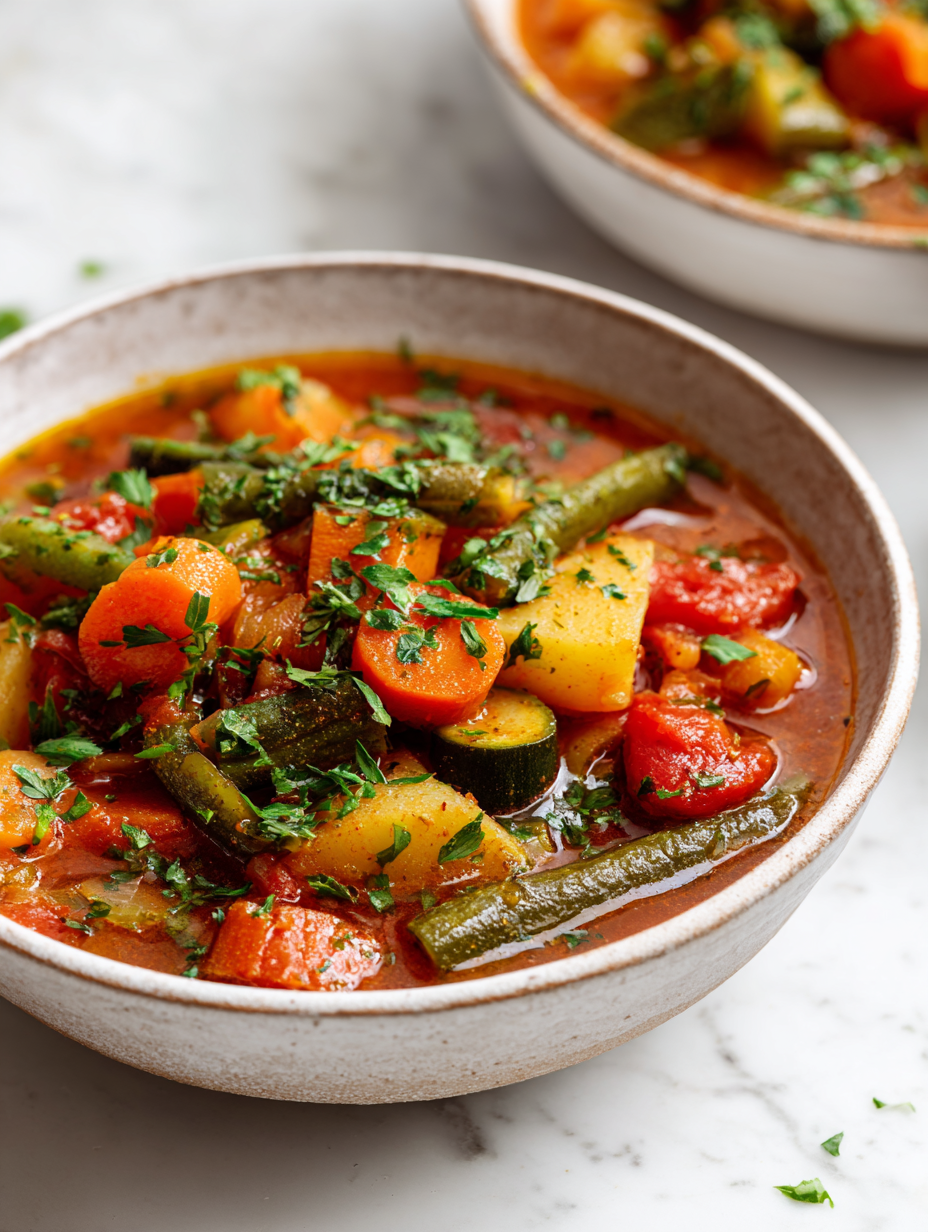
Slow Cooker Vegetable Stew
Ingredients
Equipment
Method
- Gather your equipment: a large slow cooker, a sharp knife, a cutting board, and a stirring spoon. Make sure everything is clean and ready to go.
- Peel and chop the carrots into roughly 2-cm chunks, then slice the celery and dice the onion into small, even pieces. This creates a colorful, textured base for your stew.
- Peel and chop the potatoes into similar-sized chunks, about 2 cm, for even cooking and a tender bite.
- Layer the root vegetables like carrots and potatoes at the bottom of the slow cooker first, then add the sliced celery and diced onions on top. This layering helps each vegetable cook evenly.
- Pour the diced tomatoes with their juices over the vegetables, then add the vegetable broth, ensuring the ingredients are mostly submerged.
- Add a teaspoon of dried thyme, a bay leaf, and a pinch of salt and pepper to season the stew. Cover with the lid and set the slow cooker to low.
- Cook on low for 6 to 8 hours, during which the vegetables will soften and the flavors will meld, filling your home with an inviting aroma.
- After 6 hours, check the tenderness of the vegetables by piercing them with a fork; they should be soft and breaking apart easily. Taste the broth and adjust seasoning as needed.
- Remove the bay leaf and thyme sprig if used fresh. If you prefer a thicker stew, mash some of the cooked vegetables directly in the pot with the back of your spoon.
- Stir in chopped fresh parsley for a burst of color and freshness, then let the stew sit off heat for a few minutes to allow flavors to settle.
- Serve the hot, hearty stew in bowls, garnished with additional parsley if desired. Enjoy the cozy, comforting aroma and rich, well-blended flavors.
Pro tips for vegetable stew
- Bolded mini-head: Sear vegetables briefly before slow cooking to deepen flavor and add a smoky aroma.
- Bolded mini-head: Layer root vegetables at the bottom for even cooking and to prevent mushiness.
- Bolded mini-head: Use a splash of vinegar or lemon juice at the end to brighten the flavors and balance richness.
- Bolded mini-head: Keep the lid slightly ajar during the last hour if you want a slightly thicker, more concentrated stew.
- Bolded mini-head: Add herbs towards the end of cooking to preserve their fresh, vibrant aroma and flavor.
- Bolded mini-head: Test for doneness by piercing a carrot or potato with a fork—should be tender but not falling apart.
Common mistakes and how to fix them
- FORGOT to check vegetable tenderness? Test with a fork, then extend cooking if needed.
- DUMPED in too much salt? Rinse vegetables beforehand or add salt gradually during cooking.
- OVER-TORCHED the stew? Reduce heat or cooking time, and add a splash of water if it thickens too much.
- MISSED the seasoning step? Always taste and adjust salt and herbs before serving.
Quick fixes and pantry swaps
- When stew is too thick, splash in a bit of water and stir gently.
- If vegetables are undercooked, extend cooking on low for 30 more minutes.
- Splash vinegar or lemon when flavors feel dull or flat.
- Patch over-seasoned stew with a splash of broth or water.
- Shield from over-torching by reducing heat or removing lid briefly for steam release.
Prep, store, and reheat tips
- Chop all vegetables the night before; store in airtight containers in the fridge for up to 24 hours, keeping them crisp and fresh.
- The stew can be made a day ahead, cooled completely, then stored in the fridge for up to 3 days; the flavors deepen overnight, becoming more cohesive.
- For longer storage, freeze the cooled stew in freezer-safe containers for up to 2 months; expect a slight change in texture, but flavors remain rich.
- Reheat gently on the stovetop over medium-low heat, stirring occasionally; expect the aroma to intensify and the broth to shimmer as it warms.
- Once reheated, check seasoning and adjust with a pinch of salt or fresh herbs; the stew should be hot, bubbling, and invitingly fragrant.
Top questions about vegetable stew
1. How do I know when the stew is done?
Use a sharp knife and cut vegetables into uniform pieces to ensure even cooking. Cook times vary based on size, so test tenderness with a fork.
2. How can I tell if the stew is ready?
Check that the vegetables are tender and easily pierced with a fork. The broth should be flavorful and slightly thickened.
3. What if the stew lacks flavor?
Adjust seasoning at the end with salt, pepper, and fresh herbs. If it tastes flat, a splash of lemon juice or vinegar can brighten it up.
4. Can I customize the ingredients?
You can add more vegetables or herbs during cooking. For a richer taste, stir in a spoonful of tomato paste or a dash of soy sauce.
5. How long can I store leftovers?
Yes, this stew freezes well for up to 2 months. Let it cool completely, then store in airtight containers. Reheat gently on the stove or microwave.

6. What equipment do I need?
Use a large slow cooker to prevent overcrowding, which can lead to uneven cooking. Keep the lid on tightly for best results.
7. How should I prepare the vegetables?
Chop vegetables into similar-sized pieces for even cooking. Layer root vegetables at the bottom for consistent tenderness.
8. How long should I cook it?
Start on low heat for 6-8 hours. Check tenderness after 6 hours; extend cooking if needed to soften all vegetables.
9. How can I enhance the flavor after cooking?
Add more herbs or a splash of acid (lemon or vinegar) after cooking to brighten flavors and add freshness.

10. What if my stew is too thick or too thin?
If the stew is too thick, stir in a bit of water or broth. For thin stew, cook uncovered for a bit longer to reduce the liquid.
This vegetable stew isn’t just a meal; it’s a reminder of the quiet comfort found in simple, well-cooked vegetables. It’s perfect for those moments when you want something nourishing but without fuss, especially during the busy or colder months. The slow cooker makes it effortless, leaving you with a hearty bowl and a warm kitchen aroma.
In the end, it’s about the honest flavors and the little rituals—layering vegetables, tasting as it simmers, and enjoying that first spoonful. It’s a humble dish that feels like a small act of care, no matter how hectic the day. Sometimes, that’s exactly what a good stew should do.