
This crockpot white bean soup recipe is a quiet nod to slow mornings and simple pleasures. I find myself tossing ingredients into the slow cooker before rushing out, knowing I’ll come back to something warm, creamy, and deeply satisfying. It’s the kind of dish that makes the house smell like comfort—soft herbs, simmering beans, and a hint of smoky broth.
There’s a quiet magic in how the beans absorb all those flavors over hours, transforming into a velvety, hearty soup. It’s honest food, unpretentious but soulful, perfect for chilly days or when you need something nourishing without fuss. Plus, it feels like a small act of kindness—set it, forget it, and enjoy the slow reveal of taste.
This recipe is inspired by the quiet, slow mornings of winter, where the simple act of crockpotting becomes a ritual of warmth and patience. I love how the beans absorb all the flavors over hours, turning into a creamy, comforting hug on a cold day. It’s a humble dish, but one that feels like a small victory in the busy chaos of life.
The story behind this recipe
- This recipe harks back to those weekends when I’d wake up to a chilly house, the kind where the cold air makes the bones tingle. I’d toss in beans and aromatics, then forget about it for a few hours, letting the slow heat coax out their rich, earthy flavors. It’s a dish that’s quietly built on patience, but delivers a warm, velvety bowl that feels like a small victory after a busy week.
- I remember my grandmother’s kitchen, the gentle simmer of dried beans, and how the smell would drift out into the yard, mingling with the early morning air. That memory’s stuck with me—simple, honest food that feeds the soul. It’s a humble recipe, but one that reminds me how good things take time, especially in the quiet of a slow cooker.
- heading:
Ingredient breakdown: key components
- Dried white beans: I love how they soak up flavors and get velvety soft after hours. If you’re short on time, try canned beans—just rinse and add later for texture.
- Vegetable broth: I prefer homemade or low-sodium store-bought for depth. Use chicken broth if you want a richer, smoky undertone—just keep an eye on salt.
- Onion and garlic: These form the flavor base. I like to sauté them first if I have a moment, but in the crockpot, they soften beautifully over hours, releasing sweet, fragrant aroma.
- Carrots: They add subtle sweetness and brightness. If you don’t have fresh, frozen carrots work fine—just chop them small so they cook evenly.
- Herbs (thyme, bay leaf): I often toss in fresh thyme if I have it, but dried works just as well. Remove the bay leaf before serving—nobody likes a rogue leaf in their spoonful.
- Olive oil: A drizzle at the end elevates the soup’s richness and adds a slight sheen. Skip it if you prefer a lighter, broth-forward flavor—though I think it adds a cozy finish.
- Salt and pepper: I season generously at the end, tasting for that perfect balance—remember, beans can soak up salt, so taste as you go.
Spotlight on key ingredients
White Beans:
- Dried white beans: I love how they soak up flavors and get velvety soft after hours. If you’re short on time, try canned beans—just rinse and add later for texture.
- Vegetable broth: I prefer homemade or low-sodium store-bought for depth. Use chicken broth if you want a richer, smoky undertone—just keep an eye on salt.
- Onion and garlic: These form the flavor base. I like to sauté them first if I have a moment, but in the crockpot, they soften beautifully over hours, releasing sweet, fragrant aroma.
Herbs and Vegetables:
- Carrots: They add subtle sweetness and brightness. If you don’t have fresh, frozen carrots work fine—just chop them small so they cook evenly.
- Herbs (thyme, bay leaf): I often toss in fresh thyme if I have it, but dried works just as well. Remove the bay leaf before serving—nobody likes a rogue leaf in their spoonful.
Notes for ingredient swaps
- Dried Beans: I prefer dried for their earthy flavor and ability to absorb seasonings. If you’re in a rush, canned beans are fine—just rinse them well and add later to avoid mushiness.
- Vegetable Broth: Homemade or low-sodium store-bought broth deepens the flavor. Swap with chicken broth for a richer, smoky taste—just reduce added salt accordingly.
- Onion and Garlic: These are the flavor backbone. Use onion powder or garlic powder for convenience, but fresh gives a brighter, more complex aroma.
- Carrots: Fresh carrots add natural sweetness; frozen chopped carrots work well if fresh aren’t available—just chop them small for even cooking.
- Herbs (Thyme, Bay Leaf): Fresh thyme adds a floral note; dried is perfectly fine. Remove the bay leaf before serving—it can be a choking hazard if left in the bowl.
- Olive Oil: A drizzle at the end adds richness and sheen. For a lighter option, skip or use a neutral oil, but the flavor will sit differently on the palate.
- Salt and Pepper: Season generously at the end, tasting as you go. Beans soak up salt, so adjust accordingly to avoid over-salting.
Equipment & Tools
- Large slow cooker: To cook the beans slowly and evenly over hours.
- Knife: For chopping onions, carrots, and garlic.
- Cutting board: To provide a stable surface for chopping.
- Wooden spoon: For stirring and mashing beans.
- Ladle: To serve the soup neatly into bowls.
- Immersion blender (optional): For blending part of the soup directly in the slow cooker for extra creaminess.
Step-by-step guide to white bean soup
- Gather all your equipment: a large slow cooker, a knife, a cutting board, a wooden spoon, and a ladle for serving.
- Rinse 1 pound of dried white beans thoroughly under cold water. Pick out any debris or shriveled beans.
- Soak the beans overnight in plenty of cold water, or do a quick soak: cover beans with water, bring to a boil for 2 minutes, then turn off heat and let sit for 1 hour.
- Drain and rinse the soaked beans. In the slow cooker, add the beans along with 4 cups of vegetable broth, 1 chopped onion, 3 minced garlic cloves, 2 chopped carrots, a sprig of fresh thyme, and 1 bay leaf.
- Stir everything together, then cover and cook on low for 8 hours. During cooking, smell for a rich aroma of earth and herbs. If beans haven’t softened after 8 hours, cook longer, checking every 30 minutes.
- Once beans are tender and the soup thickens, remove the bay leaf and thyme sprig. Mash some beans with the back of a spoon for extra creaminess if desired.
- Taste and season with salt and pepper. If the soup is too thick, stir in a splash more broth or hot water. For a smoother texture, use an immersion blender directly in the slow cooker for 30 seconds.
- Let the soup rest for 10 minutes to settle flavors. Drizzle with olive oil, sprinkle fresh herbs if you like, then ladle into bowls.
Let the soup sit uncovered for 10 minutes, then drizzle with good-quality olive oil and sprinkle with chopped fresh herbs like parsley or thyme. Serve hot, with crusty bread if you like. The flavors will deepen slightly as it rests.
How to Know It’s Done
- Beans are fully tender and creamy after cooking.
- Soup has thickened to a velvety consistency, not watery.
- Aromatic, earthy smell with hints of herbs and garlic.
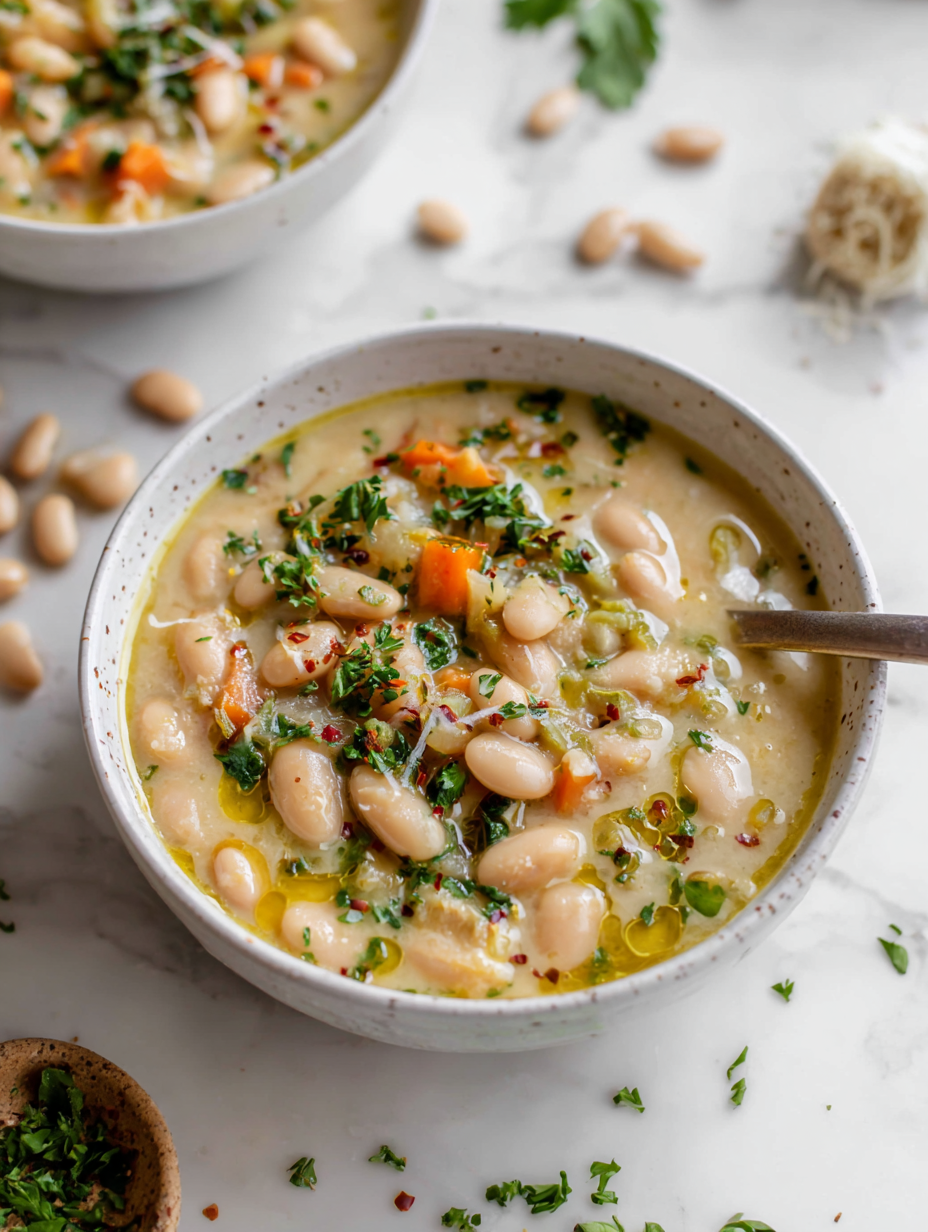
Crockpot White Bean Soup
Ingredients
Equipment
Method
- Start by rinsing the dried white beans thoroughly in cold water, removing any debris or shriveled beans. If soaking overnight, drain and set aside; for a quick soak, bring the beans to a boil in water for 2 minutes, then let sit covered for an hour. Drain and rinse after soaking.
- Chop the onion into small dice and mince the garlic cloves. Chop the carrots into small, even pieces to ensure they cook through during the slow simmer.
- Add the soaked beans to the slow cooker, along with the chopped onion, minced garlic, chopped carrots, fresh thyme sprig, bay leaf, and vegetable broth. Stir everything together to combine.
- Cover the slow cooker with the lid and cook on low for about 8 hours, or until the beans are tender and the soup has thickened to a velvety consistency. During cooking, the beans will soften and absorb the aromatic flavors, filling the house with a fragrant aroma.
- Once cooked, remove the bay leaf and thyme sprig. If you prefer a creamier texture, use an immersion blender to blend part of the soup directly in the slow cooker until smooth, or mash some beans with a fork for added creaminess.
- Taste the soup and season generously with salt and pepper, adjusting to your preference. If the soup is too thick, stir in a splash of hot broth or water to loosen it up.
- Finish by drizzling a tablespoon of olive oil over the soup for added richness and shine. Let the soup sit for a few minutes to settle the flavors, then ladle into bowls and enjoy the comforting, velvety texture.
Pro tips for white bean soup
- Bold the beans: Sauté dried beans in a bit of oil before adding to the crockpot for a richer, nuttier flavor.
- Layer flavors: Add aromatic ingredients in stages—onions first, garlic later—to build depth.
- Use cold water: Start with cold water when soaking beans to ensure even hydration and softening.
- Lift the lid: Occasionally crack the lid to let excess steam escape—this concentrates flavors in the final hour.
- Mash for creaminess: Near the end, mash some beans with the back of a spoon for a velvety texture without the need for pureeing.
- Adjust seasoning: Always taste and season at the end; beans absorb salt, so flavor might be subdued until then.
- Finish with oil: A drizzle of good-quality olive oil at the end adds shine and enhances richness.
Common mistakes and how to fix them
- FORGOT to check bean tenderness → Cook longer or mash for creaminess.
- DUMPED in too much salt → Rinse beans thoroughly, then adjust seasoning after cooking.
- OVER-TORCHED the soup → Lower heat if bubbling too aggressively; stir to prevent sticking.
- USED the wrong beans → Use dried white beans; canned beans can turn mushy if overcooked.
Quick fixes and pantry swaps
- When beans are undercooked, splash in a bit more hot water and cook longer, smell for earthiness.
- If soup is too thick, patch with hot broth or water, stir until it shimmers and smooths out.
- Splash vinegar or lemon juice if the flavor feels dull or flat after cooking.
- When soup is bland, open pantry for smoked paprika or hot sauce to add depth and shimmer.
- DUMPED in too much salt? Rinse beans again, or add a raw potato to absorb excess, then remove.
Prep, store, and reheat tips
- Chopped vegetables and herbs can be prepared the night before, stored in airtight containers in the fridge—brightens the aroma when added to the crockpot.
- Soaked beans can be kept in the fridge for up to 24 hours before cooking; keep them submerged in water to prevent drying out and preserve freshness.
- Cooked soup keeps well in the fridge for 3-4 days; reheat gently on the stovetop, stirring occasionally, until steaming and fragrant.
- For longer storage, freeze the soup in airtight containers for up to 3 months; expect some slight flavor change but still hearty and comforting upon reheating.
- Reheat in a pot over medium-low heat, stirring often; add a splash of water or broth if the soup thickens too much, until it’s hot and inviting—smells like home again.
Top questions about crockpot white bean soup
1. Can I use canned beans instead of dried?
Use dried beans for best flavor and texture, but canned beans work if you rinse them well and add later to prevent mushiness.
2. How do I control salt in this soup?
To avoid over-salting, rinse beans thoroughly if using canned, and add salt gradually, tasting as you go.
3. Should I add acid at the end?
Yes, adding a splash of vinegar or lemon juice at the end brightens the flavors and balances the earthiness of beans.
4. How long should I cook the soup?
Cooking times can vary based on your slow cooker, but generally 8 hours on low is enough for tender beans and thick soup.
5. How can I make the soup creamier?
You can mash some beans with a fork or use an immersion blender to increase creaminess and texture.

6. Can I prep this in advance?
Yes, you can prepare ingredients ahead—chop vegetables, soak beans, and keep everything refrigerated overnight for convenience.
7. How long does the soup last?
Storing in airtight containers in the fridge keeps the soup fresh for 3-4 days. Freeze for up to 3 months for longer storage.
8. How should I reheat leftovers?
Reheat gently on the stovetop over medium-low heat, stirring often, until steaming and fragrant. Add a bit of broth if it thickens.
9. What if the beans stay hard?
If the beans are not tender after 8 hours, extend cooking time and check every 30 minutes until soft and creamy.

10. What if my soup is too thick?
When soup is too thick, splash in hot water or broth and stir until it shimmers and loosens up.
This soup feels like a quiet gift on chilly days, slow-cooked to develop deep, earthy flavors that warm from the inside out. There’s something satisfying about knowing it’s simmering steadily, filling the house with comforting aromas of herbs and beans. It’s a humble dish, but one that quietly reminds me that patience and simple ingredients can create real comfort.
Whenever I make this, I appreciate how adaptable and forgiving it is—perfect for lazy weekends or busy weeknights. A bowl of this soup isn’t just nourishment; it’s a small, honest act of care and grounding, especially when life feels a little chaotic.