
This Crockpot Chicken Noodle Soup isn’t about complicated techniques or fancy ingredients. It’s about leaning into the slow, gentle magic of a slow cooker to turn simple chicken, vegetables, and noodles into something that feels like a warm hug after a long day. I’ve found that the real trick is in the timing—letting the flavors meld without overcooking the noodles, which can turn mushy if you’re not careful.
There’s something satisfying about tossing everything into the crockpot in the morning and coming home to the smell of savory broth and tender chicken. It’s a recipe that’s become a household staple, especially when I want comfort without the chaos. The best part? It’s forgiving—adjust the herbs, swap the noodles, and it still comes out right, every time.
This recipe is inspired by the quiet, unexpected joy of making a hearty soup that tastes like it simmered all day, even when you only have a few hours. It’s about capturing that slow-cooked depth without the fuss, perfect for busy weekdays or lazy weekends. I love how the aroma of chicken, herbs, and noodles fills the house, turning simple ingredients into a comforting, familiar bowl.
The story behind this recipe
- This recipe came from a lazy Sunday afternoon when I realized I was out of my usual quick fixes. I threw some chicken, veggies, and noodles into the crockpot without much thought, expecting a decent meal. What surprised me was how deeply comforting it was, almost like I’d slow-cooked all day. It became a go-to for those busy days when I want real flavor without the fuss.
- The idea of building layers of flavor with minimal effort has always appealed to me. I love how the slow cooker transforms simple ingredients into something richer and more soulful. It’s a reminder that good food doesn’t always need to be complicated—sometimes, it’s just about patience and the right tools.
- heading: The story behind this recipe
Ingredient breakdown: key components
- Chicken breasts: I like using boneless, skinless breasts—they cook evenly and stay tender, but if you prefer dark meat, thighs work even better and stay juicier.
- Carrots and celery: Fresh is best for that crisp bite and bright aroma, but frozen works fine if you’re in a pinch—just skip peeling if they’re prepped.
- Onion: I always opt for yellow onions—they bring depth and sweetness as they cook down, but shallots can add a subtler, milder flavor if that’s what you like.
- Broth: Homemade is incredible—rich, full-bodied, with a smoky undertone. Store-bought works just as well, especially if it’s low sodium, so you can control the salt.
- Noodles: Wide egg noodles are my go-to—they hold up well, but if you want a lighter soup, rice noodles or even broken-up wonton wrappers can surprise you with their delicate texture.
- Herbs: Fresh thyme and parsley brighten everything up—add a sprig of thyme early on for flavor, then sprinkle fresh parsley at the end for a burst of color and aroma.
- Seasonings: Salt and pepper are essentials, but a splash of soy sauce or a squeeze of lemon at the end can add that unexpected zing, waking up the broth.
Spotlight on Key Ingredients
Chicken:
- Chicken breasts: I prefer boneless, skinless breasts—they cook evenly and stay tender, but thighs add juiciness if you like darker meat.
- Carrots and celery: Fresh veggies bring a crisp bite and bright aroma, but frozen works in a pinch—just skip peeling if prepped.
- Herbs: Fresh thyme and parsley add brightness—stems release flavor early, and leaves provide a fresh pop at the end.
Noodles and Broth:
- Noodles: Wide egg noodles are my favorite—they hold up well, but rice noodles or broken wontons can surprise with their delicate texture.
- Broth: Store-bought is fine, but homemade broth has depth and smoky undertones; low sodium allows for better seasoning control.
- Herbs: Fresh parsley and thyme brighten the soup, releasing aroma as they cook—add at the end for maximum freshness.
Notes for ingredient swaps
- Dairy-Free: Use coconut milk or a splash of olive oil to add richness, but expect a slightly different mouthfeel and aroma.
- Gluten-Free: Swap traditional noodles for rice noodles or zucchini noodles for a lighter, vegetable-forward soup.
- Low Sodium: Choose unsalted broth and add salt gradually; consider anchovy paste for depth without extra salt.
- Vegetarian: Replace chicken with hearty mushrooms like shiitake or portobello, and use vegetable broth for full flavor.
- Fresh Herbs: If you don’t have parsley or thyme, dried herbs work—just use half the amount to avoid overpowering.
- Noodles: Use broken-up cooked rice or quinoa for a different texture, which keeps the soup lighter and gluten-free.
- Veggies: Frozen mixed vegetables can replace fresh carrots and celery—just add a few extra minutes for thawing.
Equipment & Tools
- Large slow cooker: Main cooking vessel for gentle, even heat.
- Sharp knife: Chop vegetables and chicken cleanly.
- Cutting board: Provide a stable surface for prepping ingredients.
- Ladle: Serve the soup portion without mess.
- Measuring cup: Accurately add broth and liquids.
Step-by-step guide to Crockpot Chicken Noodle Soup
- Gather your equipment: a large slow cooker, a sharp knife, a cutting board, a ladle, and a measuring cup. The slow cooker is your main stage, so make sure it’s clean and functioning well.
- Prep the chicken: trim excess fat, and if using breasts, cut into large chunks (about 2-inch pieces). For thighs, bone-in or boneless works, just remove any skin if preferred.
- Chop the veggies: peel and dice 2 carrots, 2 stalks of celery, and 1 medium onion. Aim for uniform pieces so they cook evenly, about 1/2-inch dice.
- Add ingredients to the crockpot: place chicken, chopped veggies, 3 cloves minced garlic, 1 teaspoon dried thyme, and a pinch of salt and pepper into the slow cooker.
- Pour in the broth: add 6 cups of chicken broth—enough to cover the ingredients. If you like a richer broth, use homemade or add a splash of soy sauce for depth.
- Set it to cook: cover and cook on low for 6-8 hours or high for 3-4 hours. The house will start smelling like a cozy Sunday afternoon, so good you’ll want to sneak a sip.
- Prepare the noodles: about 30 minutes before serving, add 2 cups of wide egg noodles. Stir well, then cover and cook on high. Check periodically to prevent overcooking—noodles should be tender but not mushy.
- Stir and check the soup: after 15 minutes, test a noodle—if it’s cooked through but still firm, you’re good. If not, give it another 5 minutes and check again.
- Finish with herbs: about 5 minutes before serving, stir in chopped fresh parsley and a squeeze of lemon for brightness. Taste and adjust salt or pepper if needed.
- Rest and serve: turn off the crockpot, let the soup sit for 5 minutes to settle. Ladle into bowls, making sure each gets a good mix of chicken, veggies, and noodles.
Once cooked, turn off the crockpot and let the soup rest for 5 minutes. Ladle into bowls, garnishing with extra parsley or a squeeze of lemon if desired. Serve hot, with crusty bread if you like a hearty touch.
How to Know It’s Done
- Noodles are tender but not mushy, with a slight chew.
- Chicken easily pulls apart with a fork, juices run clear.
- Broth is flavorful, aromatic, with a well-rounded chicken taste.
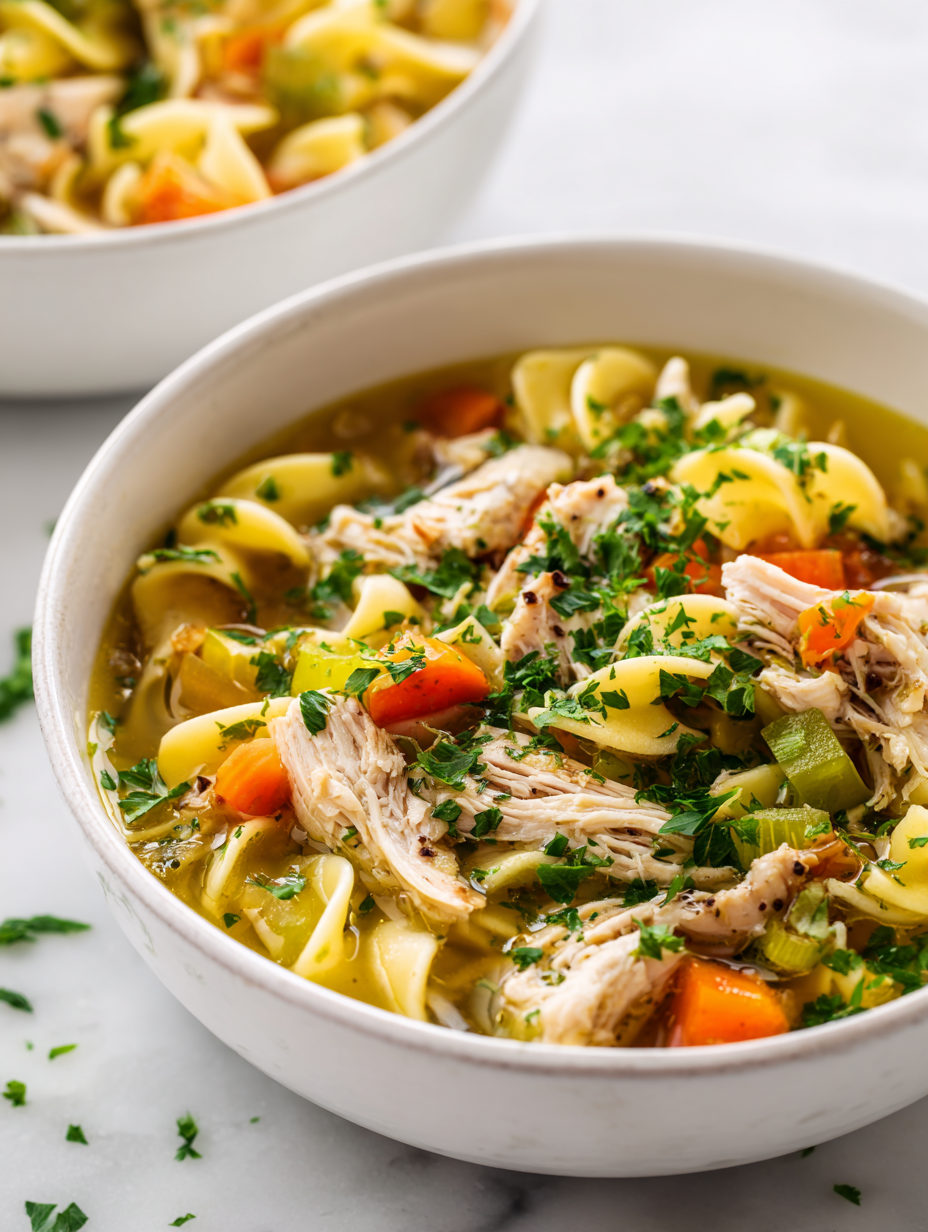
Crockpot Chicken Noodle Soup
Ingredients
Equipment
Method
- Gather your equipment: a large slow cooker, a sharp knife, a cutting board, a ladle, and a measuring cup. Make sure the slow cooker is clean and ready to go.
- Prepare the chicken: trim any excess fat from the chicken breasts and cut them into large, roughly 2-inch chunks. This helps them cook evenly and stay tender.
- Chop the vegetables: peel and dice the carrots, dice the celery stalks, and dice the onion into small, uniform pieces. These will cook down to add flavor and texture to the soup.
- Place the chicken, carrots, celery, onion, minced garlic, dried thyme, and a pinch of salt and pepper into the slow cooker. This forms the flavor base of your soup.
- Pour in the chicken broth, covering the ingredients. Give everything a gentle stir to combine, then cover with the lid.
- Set your slow cooker to low and cook for 6 to 8 hours, or on high for 3 to 4 hours. The house will fill with a savory aroma as the chicken becomes tender and flavors meld.
- About 30 minutes before serving, add the wide egg noodles to the slow cooker. Stir gently to distribute, then cover and cook on high. Check after 15 minutes—noodles should be tender but still have a slight bite.
- Test a noodle for doneness; if it’s tender but not mushy, stir in chopped fresh parsley and squeeze in a little lemon for brightness. Adjust seasoning with salt and pepper if needed.
- Turn off the slow cooker and let the soup rest for 5 minutes. This helps the flavors settle and thickens the broth slightly.
- Use a ladle to serve the soup into bowls, making sure each portion has a good mix of chicken, vegetables, noodles, and broth. Garnish with extra parsley if desired, and enjoy your comforting bowl of homemade chicken noodle soup.
Tips and Tricks for Best Results
- BOLD HERBS: Crush dried thyme between your fingers before adding to release more aroma and flavor.
- Noodle Timing: Add noodles 30 minutes before serving; test a strand for perfect al dente texture.
- Layer Flavors: Sear chicken quickly before adding to deepen the broth’s savory richness—if time allows.
- Broth Boost: Drop a bay leaf or two into the slow cooker for a subtle, earthy undertone.
- Vegetable Prep: Dice carrots and celery uniformly for even cooking and a pleasing bite.
- Herb Finish: Stir chopped parsley and a squeeze of lemon at the end for fresh, vibrant notes.
- Mushroom Swap: For extra umami, toss in a handful of sliced shiitake or cremini mushrooms during cooking.
Common mistakes and how to fix them
- FORGOT to adjust cook time → Check noodles after 15 minutes to prevent mushiness.
- DUMPED too much salt → Use low-sodium broth and taste before adding more salt.
- OVER-TORCHED the noodles → Stir regularly and add broth if they stick or burn.
- MISSED stirring herbs at the end → Add fresh parsley and lemon last for bright flavor.
Quick fixes and pantry swaps
- When soup tastes flat, splash a little soy sauce or lemon juice for brightness.
- If noodles turn mushy, immediately remove and rinse with cold water to stop cooking.
- Splash a bit of broth if the soup is too thick or concentrated—stir well to loosen.
- Patch over-salted broth with a peeled potato to absorb excess salt—remove after 10 minutes.
- Shield noodles from overcooking by adding them later and stirring gently to distribute heat evenly.
Prep, store, and reheat tips
- Chop vegetables and measure broth a day in advance—this speeds up cooking and keeps ingredients fresh, crisp, and aromatic when you start cooking.
- Store cooked chicken, cooled to room temperature, in an airtight container for up to 3 days; the savory aroma of seasoned meat makes the fridge smell inviting.
- Soup can be kept in the fridge for 3-4 days; the flavors deepen over time, especially if you add herbs just before serving for a fresh burst.
- Reheat gently on the stovetop over low heat, stirring occasionally. Listen for a gentle simmer and smell the broth warming—avoid boiling to keep noodles from over-softening.
- For longer storage, freeze in airtight containers for up to 2 months. Thaw overnight in the fridge, then reheat until steaming and fragrant, with noodles still holding some bite.
Top questions about Crockpot Chicken Noodle Soup
1. Can I use different chicken cuts?
Use boneless, skinless chicken breasts for tender, evenly cooked meat. Thighs add juiciness but may need extra cooking time.
2. When should I add the noodles?
Add noodles about 30 minutes before serving to prevent mushiness. Test a strand for perfect al dente.
3. How do I keep noodles from overcooking?
Stir the soup gently after adding noodles, and keep an eye on the texture. If noodles are overcooked, they turn mushy quickly.
4. Can I control the salt content?
Use low-sodium broth if you prefer a less salty soup. Taste before adding extra salt, as the broth can vary in saltiness.
5. Can I use frozen veggies?
Yes, frozen vegetables like carrots and celery work well—just add a few extra minutes for thawing during cooking.

6. Do I add herbs during cooking or at the end?
Add fresh herbs like parsley and thyme at the end to preserve their vibrant flavor and aroma. Dried herbs can be used earlier, but less intensely.
7. How do I know when noodles are done?
To prevent mushy noodles, check their texture after about 15 minutes of simmering and remove from heat once tender but firm.
8. How should I reheat leftovers?
Reheat gently on the stovetop over low heat, stirring occasionally. Test for steaming and aroma before serving.
9. What if my soup is too salty?
If the soup is too salty, add a peeled potato to absorb excess salt, then remove after 10 minutes. Alternatively, dilute with additional broth.

10. Can I freeze leftovers?
You can freeze the soup in airtight containers for up to 2 months. Thaw overnight in the fridge and reheat until steaming.
This soup feels like a warm, familiar hug on days when everything else is a bit chaotic. It’s simple, honest, and turns out every time—no fuss, just good, reliable comfort.
In a world rushing by, this recipe reminds me that great flavor often comes from patience and familiar ingredients. It’s a quiet act of care that’s worth every simmer and stir.